Address
P.O. Box 791
Boulder, CO 80306
303-441-3440
About Us
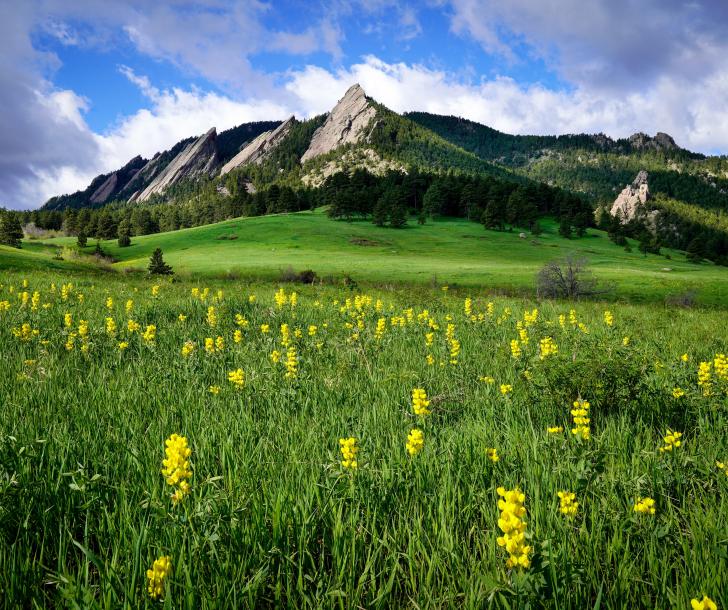
Climbing on OSMPHistory of Climbing in BoulderBoulder is the site of the earliest recorded climbing in Colorado. Since the turn of the 20th Century, the Flatirons have attracted climbers such as Everest mountaineers Tom Hornbein and David Breashears. As a result, the Flatirons have influenced national climbing standards with their appeal to world-renowned climbers. This picture of the first climbing club in Boulder was taken at the bottom of the 1st Flatiron. But don't let these feats cause you to lose your guard: in its long history, the 3rd has also brought many careless climbers to their deaths. It is a multiple-pitch climb that is difficult and time consuming to escape from in bad weather. Long before bouldering was accepted as a sport distinct from climbing, some of the greatest climbers in history came to Boulder in search of problems. In the late 1950s and 60s, Boulder was frequented by climbers such as Royal Robbins, Corwin Simmons, Bob Beatty, Prince Willman, Ray Northcutt, Dallas Jackson and Bob Culp. Prominent local climbers include Jim Erickson, Layton Kor, and brothers Roger and Bill Briggs. Pat Ament arrived in Boulder in the early 1960s to address the majority of problems found on Flagstaff Mountain. The result was standard-setting bouldering trends. The 1970s brought a gymnastic ability to bouldering as Bob Candelaria and Jim Holloway developed even more difficult problems. Protecting the resources we loveOpen Space and Mountain Parks is a popular destination for climbers and boulderers alike. The diversity of outcroppings and boulder fields allow explorers of any skill level a challenge. With the views of the prairie and the Rocky Mountains as a backdrop, there's much to enjoy, and many people enjoy these areas every year. Help preserve this experience for all visitors by respecting seasonal raptor and bat closures (updated closure information posted here) and using designated trails when accessing your climb. Social trails can lead to fragmentation of wildlife corridors and indirectly affect wildlife behavior; using the designated access trails will help prevent this. Follow this link to learn how you can "Leave No Trace" on Open Space and Mountain Parks. Follow this link to learn about climbing in Habitat Conservation Areas (HCAs) and off-trail permits. Bolted RoutesThe good news for climbers: because Open Space & Mountain Parks is such a popular destination for climbers, there is an abundance of bolted routes from which to choose. The bad news for climbers: because Mountain Parks is such a popular destination for climbers, there is an abundance of scarring, social trails and other natural resource damage from new route development and placing fixed protection. Rather than removing the fixed protection climbers have been using for years, OSMP has compromised with a prohibition of adding fixed protection to routes. So please, plan your climb on established routes to help preserve the rocks you enjoy climbing. A number of books that provide detailed information on already protected climbing routes and access, include:
Replacing an Unsafe BoltIf you should come across what you determine to be an unsafe bolt and wish to replace it, download and use this Open Space and Mountain Parks Plans for Future Improvements Include:
Last Updated on Monday, 24 August 2009 11:38 |
Clicking any flag icon above calls Google translation service to translate the page to the language you have chosen. Graphics containing text, PDF files, and special applications on this page cannot be translated. As with any computer translation, conversion is not context-sensitive and may not convert text into its intended meaning. The city of Boulder does not guarantee the accuracy of translated text. If the information you are seeking is not clear please return to the main page for the specific city department and contact them directly. Please note that some applications and/or services may not work as expected when translated.
Plugins needed for this Web site: [ Adobe Reader ] [ Flash Player ] [ Quicktime ] [ Real Player ]

Earl and Floyd Millard made the first known ascent of the infamous 3rd Flatiron in 1906. Since then, the rock has been the destination for climbing enthusiasts world-wide. Some of the more notable ascents include Dale Johnson and Phil Robertson on roller skates (!), a blind man led by Ernest Greenman (who climbed it 101 times), Baker Armstrong without hands, and Baker again at age 60 in 16 minutes.
Notification for Bolt Replacement FormĀ (