Home Introduction

Bookmark and Share Print

policy-2.37-Relationship-to-Public-Realm

housing_final

2. Built Environment

Boulder's compact, interconnected urban form helps ensure the community's environmental health, social equity and economic vitality. It also supports cost-effective infrastructure and facility investments, a high level of multimodal mobility, and easy access to employment, recreation, shopping and other amenities.

Background – City Structure and Projected Growth
Sustainable Urban Form Definition
Community Identity/ Land Use Pattern
Rural Lands Preservation
Neighborhoods
Mixed Use and Higher Density Development
Activity Centers
Urban Design Linkages
Community Conservation
Design Quality


Background – City Structure and Projected Growth

Elements That Define Boulder’s City Structure

Boulder’s distinctive ‘sense of place’ and compact size did not happen by accident. It has taken creative public policies and pragmatic planning decisions over many years to produce and preserve Boulder’s unique character and physical beauty. Elements that define Boulder’s city structure and support its continuing evolution to a more sustainable urban form are described below.

1. Natural Setting

Natural SettingBoulder’s natural setting defines its size and shape.

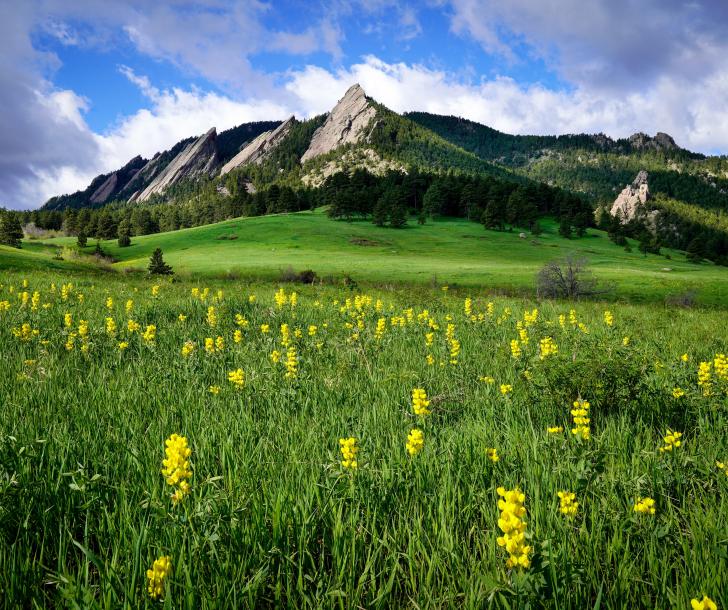
The two most important factors that shape the City of Boulder are its mountain backdrop and surrounding greenbelt. These natural features form a clearly-defined edge that separates the urban area from the open countryside.  Creeks and ditches have also shaped the layout of the city.

Community Identity/Land Use Pattern policies
Creeks and ditches


2. Individual Character Areas

Different parts of Boulder are distinguished by their individual character.  iNDIVIDUAL Character Areas

Boulder’s city structure is also defined by the individual character and distinctive qualities of its different areas, drawing on each area’s unique history, development pattern, land uses, amenities and other factors. 

Some of the distinctive character areas within the city are:

  • downtown historic core
  • surrounding pre-World War II residential neighborhoods
  • 28th/30th Street regional retail corridor
  • University and federal lab campuses
  • industrial areas in East Boulder and Gunbarrel
  • post-World War II residential neighborhoods
  • North Boulder neo-traditional/New-Urbanist neighborhoods.

Neighborhood policies
Sensitive Infill and Redevelopment

Context in Design of Private Sector Projects

Subcommunity and Area Planning


3. Activity Centers

ACTIVITY CENTERActivity centers concentrate activities into nodes at a variety of scales.

Boulder’s commercial, entertainment, educational and civic centers are focused in concentrated nodes of activities at a variety of scales distributed throughout the community.

At the highest level of intensity are the city’s three regional centers. They form a triangle at Boulder’s geographic center: the Historic Downtown, the Boulder Valley Regional Center (BVRC), and the University of Colorado (CU) with the University Hill business district, which also serves as a neighborhood center for the surrounding area. Each regional center has a distinct function and character, provides a wide range of activities and draws from the entire city as well as the region.

The next tier of intensity is neighborhood activity centers. In addition to serving as neighborhood gathering places, these centers also provide goods and services for the day-to-day needs of nearby residents, workers and students, and are easily accessible from surrounding areas by foot, bike and transit.

Activity Centers policies


4. Mobility Grid

Grid_Existing Grid_Existing

Existing Grid

Future Grid

Boulder’s ‘mobility grid’ interconnects the city.

Boulder’s ‘mobility grid’—the system of streets, alleys, transit corridors, multi-use and greenway paths—interconnects the city and both serves and reflects the city’s land use pattern. Networks for vehicles, bicycles, pedestrians and transit—sometimes shared, sometimes separate—overlay the city and create a lacework of movement between and within regional centers, neighborhood centers, and residential and employment areas. 

The western historic neighborhoods of the city have a fine-grained, walkable and bikeable street grid. Whereas other parts of the city,  such as East Boulder, have larger, more car-oriented super-blocks.  The city seeks to extend a more pedestrian and bike-friendly mobility grid to all parts of the community.

Transportation policies
Urban Design Linkage policies


5. The Public Realm

Public_RealmThe public realm provides key functions and strongly influences character and aesthetics.

The public realm includes the city’s streets, sidewalks and paths, ditches, parks, plazas and other urban outdoor spaces.  It comprises a large portion of Boulder’s land and represents a substantial public investment.  The design of the public realm plays a major role in defining the character, identity and aesthetic quality of the city overall and individual neighborhoods. 

Urban Design Linkage policies
Importance of Street Trees and Streetscapes
Private Sector Projects


Projected Growth

Projected-Growth-finalThis diagram illustrates where housing and jobs could be added within the city Service Area through development of vacant parcels and redevelopment of properties under current plans and regulations.  The Built Environment policies help shape the form and quality of future growth, in addition to protecting historic and environmental resources and preserving established neighborhood character.


Sustainable Urban Form Definitionp0licy_2_sustainable_urban_form

The city’s urban form is shaped by:

  • location and design of streets, paths and open spaces
  • mix of uses and activities that are allowed in each area of the city
  • design and intensity of development and public improvements. 

The city’s goal is to evolve toward an urban form that supports sustainability.  This “sustainable urban form” is defined by the following components:

Compact- a development pattern with density in appropriate locations to create and support viable, long term commercial opportunities and high frequency public transit.

Connected:

  • An integrated multimodal system with abundant, convenient and pleasant ways to get around on foot, bike, and transit service.
  •  Opportunities for people to connect to nature and natural systems.

Complete:

  • Daily needs within easy access from home, work or school without driving a car.
  • A quality of life that attracts, sustains and retains diverse businesses, creative entrepreneurs and investment in the local economy.

Green, Attractive and Distinct:

  • Comfortable, safe, and attractive places to live, work, learn and recreate that have a distinct, memorable character and high-quality design and that promote healthy, active living.
  • A public realm that is beautiful, well-used and enriched with art, trees and landscaping.
  • Buildings, streets, utilities and other infrastructure that protect natural systems, minimize energy use, urban heat island effects and air and water pollution, and support clean energy generation. 
  • Preservation of agriculturally significant lands, environmentally sensitive areas and historic resources.

Inclusive:

  • A diversity of employment, housing types, sizes and prices, and other uses to meet the needs of a diverse community.
  • Welcoming, accessible public gathering spaces for interaction among people of all ages, walks of life and levels of ability.


Community Identity/Land Use Pattern

2.01 Unique Community Identity

The unique community identity and sense of place that is enjoyed by residents and characterized by the community’s setting and history will be respected by policy decision makers.

2.02 Physical Separation of Communities

The city and county will strive to maintain and enhance an open land buffer that separates development in the Boulder Valley from surrounding communities and contributes to distinct community identities.

City and County Open Space map

2.03 Compact Development Pattern

The city and county will ensure that development will take place in an orderly fashion, take advantage of existing urban services, and avoid patterns of leapfrog, noncontiguous, scattered development within the Boulder Valley. The city prefers redevelopment and infill as compared to development in an expanded Service Area in order to prevent urban sprawl and create a compact community. 

2.04 Open Space Preservation policy-2.04-Preservation-of-Open-Space

The city and county will permanently preserve lands with open space values by purchasing or accepting donations of fee simple interests, conservation easements or development rights and other measures as appropriate and financially feasible. Open space values include use of land for urban shaping and preservation of natural areas, environmental and cultural resources, critical ecosystems, water resources, agricultural land, scenic vistas and land for passive recreational use.

City Structure: Natural Setting
Biodiversity and Native Ecosystem policies
Open Space and Mountain Parks Master Plan

2.05 Design of Community Edges and Entryways

Well-defined edges and entryways for the city are important because they support an understanding and appreciation of the city’s image, emphasize and preserve its natural setting, and create a clear sense of arrival and departure. Natural features are most effective as edges, but public open land, major roadways or heavy tree planting can also function as community edges. As new areas are developed, the definition of a community edge will be a design priority.  Major entryways into the Boulder Valley will be identified, protected and enhanced. 


Rural Lands Preservation

preservation of rural lands2.06 Preservation of Rural Areas and Amenities

The city and county will attempt to preserve existing rural land use and character in and adjacent to the Boulder Valley where environmentally sensitive areas, hazard areas, agriculturally significant lands, vistas, significant historic resources, and established rural residential areas exist. A clear boundary between urban and rural areas at the periphery of the city will be maintained. Existing tools and programs for rural preservation will be strengthened and new tools and programs will be put in place.

2.07 Delineation of Rural Lands

Area III consists of the rural lands in the Boulder Valley outside the Boulder Service Area. The Boulder Service Area includes urban lands in the city and lands planned for future annexation and urban service provision. Within Area III, land is placed within one of two classifications: the Area III-Rural Preservation Area or the Area III-Planning Reserve Area. The boundaries of these two areas are shown on the Area III-Rural Preservation Area and Area I, II, III Map. The more specific Area III land use designations on the Boulder Valley Comprehensive Plan map indicate the type of non-urban land use that is desired as well as recognize those county developments that have or can still develop at other than rural densities and uses. The Area III-Rural Preservation Area is intended to show the desired long-term rural land use. The Area III-Planning Reserve Area is an interim classification until it is decided whether or not this land should be placed in the Area III-Rural Preservation Area or in the Service Area.

a) Area III-Rural Preservation Area

The Area III-Rural Preservation Area is that portion of Area III where rural land uses and character will be preserved through existing and new rural land use preservation techniques and no new urban development will be allowed during the planning period. Rural land uses to be preserved to the greatest possible extent include: rural town sites (Eldorado Springs, Marshall and Valmont); existing county rural residential subdivisions (primarily along Eldorado Springs Drive, on Davidson Mesa west of Louisville, adjacent to Gunbarrel, and in proximity to Boulder Reservoir); city and county acquired open space and parkland; sensitive environmental areas and hazard areas that are unsuitable for urban development; significant agricultural lands; and lands that are unsuitable for urban development because of a high cost of extending urban services or scattered locations, which are not conducive to maintaining a compact community.

b) Area III-Planning Reserve Area

The Area III-Planning Reserve Area (PRA) is the portion of Area III with rural land uses where the city intends to maintain the option of limited Service Area expansion. The location and characteristics of this land make it potentially suitable for new urban development, based on the apparent lack of sensitive environmental areas, hazard areas, and significant agricultural lands, the feasibility of efficient urban service extension, and contiguity to the existing Service Area, which maintains a compact community.

Area I, II, III Map

2.08 Rural Density Transfer

The city and county will jointly determine criteria and areas for transfer of development rights (TDRs) within or in proximity to the Boulder Valley, in order to secure conservation easements on valuable rural lands from which density may be transferred and shift those rural residential densities to appropriate urban settings where the negative impacts of growth can be better mitigated or avoided.


Neighborhoods policy-2.09-Neighborhoods-as-Building-Blocks

2.09 Neighborhoods as Building Blocks

The city and county will foster the role of neighborhoods to establish community character, provide services needed on a day-to-day basis, foster community interaction, and plan for urban design and amenities. All neighborhoods, should offer unique physical elements of character and identity such as distinctive development patterns or architecture, historic or cultural resources, amenities, varied topography, and distinctive community facilities and business areas.

Neighborhood Activity Centers

2.10 Preservation and Support for Residential Neighborhoods

The city will work with neighborhoods to protect and enhance neighborhood character and livability and preserve the relative affordability of existing housing stock. The city will seek appropriate building scale and compatible character in new development or redevelopment, appropriately sized and sensitively designed streets and desired public facilities and mixed commercial uses.  The city will also encourage neighborhood schools and safe routes to school. 

2.11 Accessory Units

Consistent with existing neighborhood character, accessory units will be encouraged in order to increase rental housing options in single family residential neighborhoods. Regulations developed to implement this policy will address potential cumulative negative impacts on the neighborhood. Accessory units will be reviewed based on the characteristics of the lot including size, configuration, parking availability, privacy and alley access.

2.12 Preservation of Existing Residential Uses

The city will encourage the preservation or replacement in-kind of existing, legally established residential uses in non-residential zones. Non-residential conversions in residential zoning districts will be discouraged, except where there is a clear benefit or service to the neighborhood.

Conversion of Residential Uses

2.13 Protection of Residential Neighborhoods Adjacent to Non-residential Zones

The city and county will take appropriate actions to ensure that the character and livability of established residential neighborhoods will not be undermined by spill-over impacts from adjacent regional or community business zones or by incremental expansion of business activities into residential areas. The city and county will protect residential neighborhoods from intrusion of non-residential uses by protecting edges and regulating the impacts of these uses on neighborhoods.

2.14 Mix of Complementary Land Uses

The city and county will strongly encourage a variety of land uses in new developments consistent with other land use policies. In existing neighborhoods, a mix of land use types, housing sizes and lot sizes may be possible if properly mitigated and respectful of neighborhood character. Wherever land uses are mixed, careful design will be required to ensure compatibility, accessibility and appropriate transitions between land uses that vary in intensity and scale.

Housing policies
Individual Character Areas

Design Quality policies

2.15 Compatibility of Adjacent Land Uses

To avoid or minimize noise and visual conflicts between adjacent land uses that vary widely in use, intensity or other characteristics, the city will use tools such as interface zones, transitional areas, site and building design and cascading gradients of density in the design of subareas and zoning districts. With redevelopment, the transitional area should be within the zone of more intense use.


Mixed Use and Higher Density Development

2.16 Mixed Use and Higher Density Development

The city will encourage well-designed mixed use and higher density development that incorporates a substantial amount of affordable housing in appropriate locations, including in some commercial centers and industrial areas and in proximity to multimodal corridors and transit centers.  The city will provide incentives and remove regulatory barriers to encourage mixed use development where and when appropriate.  This could include public-private partnerships for planning, design or development, new zoning districts, and the review and revision of floor area ratio, open space and parking requirements.     

Affordable Housing


Activity Centers policy-2.17-Variety-of-Activity-Centers

2.17 Variety of Activity Centers

The city and county support a variety of regional, subcommunity and neighborhood activity centers. Activity centers should be located within walking distance of neighborhoods and business areas and designed to be compatible with surrounding land uses and intensity and the context and character of neighborhoods and business areas. Good multimodal connections to and from activity centers and accessibility for people of all ages and abilities will be encouraged.

2.18 Role of the Central Area

The central area will continue as the regional service center of the Boulder Valley for office, retail, financial, governmental, medical, cultural and university activities. It will remain the primary activity center and focal point of the Boulder Valley. The central area includes distinct, interrelated activity centers such as the Downtown Business District, University of Colorado, Canyon Boulevard Cultural Corridor, and Boulder Valley Regional Center. A variety of land uses surrounds these activity centers and transportation alternatives provide direct connections between them.

City Structure: Activity Centers
Central Area


Urban Design Linkages policy-2.19-Urban-Open-Lands

2.19 Urban Open Lands

Open lands within the fabric of the city constitute Boulder’s public realm and provide recreational opportunities, transportation linkages, gathering places and density relief from the confines of the city, as well as protection of the environmental quality of the urban environment. The city will promote and maintain an urban open lands system to serve the following functions:

  • active and passive recreation
  • environmental protection
  • flood management
  • multimodal transportation
  • enhancement of community character and aesthetics.

City Structure: Public Realm

2.20 Boulder Creek, Tributaries and Ditches as Important Urban Design Features

The city and county will support the preservation or reclamation of the creek corridors for:

  • natural ecosystems
  • wildlife habitat and cultural resources
  • for recreation and bicycle and pedestrian transportation
  • to provide flood management
  • to improve air and water quality
  • to provide a contrast to urban development.

Path development will be sensitive to the ecology, terrain and privacy of adjacent residents and surroundings.

Wetland and Riparian Protection
Greenways Master Plan

2.21 Commitment to a Walkable and Accessible City

The city and county will promote the development of a walkable and accessible city by designing neighborhoods and business areas to provide easy and safe access by foot to places such as neighborhood centers, community facilities, transit stops or centers, and shared public spaces and amenities.  The city will consider additional neighborhood-serving commercial areas where appropriate and supported by the neighbors they would serve.

2.22 Improve Mobility Grid

The walkability, bikeability and transit access should be improved in parts of the city that need better connectivity and mobility such as in East Boulder.  This should be achieved by coordinating and integrating land use and transportation planning and will occur through both public investment and private development.

2.23 Trail Corridors/Linkages

In the process of considering development proposals, the city and county will encourage the development of paths and trails where appropriate for recreation and transportation such as walking, hiking, bicycling or horseback riding. Implementation will be achieved through the coordinated efforts of the private and public sectors.


Community Conservation Section_2_built_env

2.24 Preservation of Historic and Cultural Resources

The city and county will identify, evaluate and protect buildings, structures, objects, districts, sites and natural features of historic, architectural, archaeological, or cultural significance with input from the community.  The city and county will seek protection of significant resources through local designation when a proposal by the private sector is subject to discretionary development review.

2.25 Leadership in Preservation: City- and County-Owned Resources

The city and county will evaluate their publicly-owned properties to determine their historical, architectural, archaeological or cultural significance. Eligible resources will be protected through local designation. Secondary structures that are part of and convey the cultural significance of a site, such as a farm complex and alley structure, should be retained and preserved as well.

2.26 Historic and Cultural Preservation Plan

The city and county will develop a Boulder Valley-wide preservation plan in order to:

  • integrate historic preservation issues into the Boulder Valley Comprehensive Plan
  • ensure coordination between preservation goals and zoning, land use, growth management, transportation and housing goals
  • ensure consistency among governmental policies that affect the community’s historic, archeological and cultural resources.

Preservation plans will be developed with public and landowner participation.

2.27 Eligible Historic Districts and Landmarks

The city has identified areas that may potentially be designated as historic districts. The Designated and Eligible Historic Districts map shows areas with designation potential and current designated historic districts. There are many individual buildings of landmark quality both within and outside of these eligible areas. Additional historic district and landmark designation will be encouraged.

2.28 Historic Preservation/Conservation Tools

The city will develop a variety of tools that address preservation and conservation objectives within the community. Specific tools that address historic preservation and conservation objectives will be matched to the unique needs of specific areas. Preservation tools may include incentives programs, designation of landmark buildings and districts, design review, and public improvements. Conservation districts, easements and other tools may be applied in areas that do not qualify as local historic districts but contain features that contribute to the quality of the neighborhood or community. These could include historic resources that have lost integrity, neighborhoods with significant character but not historically significant, and scattered sites that share a common historic or architectural theme.

2.29 Preservation of Archaeological Sites and Cultural Landscapes

The city will develop a plan and processes for identification, designation and protection of archaeological and cultural landscape resources such as open ditches, street and alleyscapes, railroad rights-of-way, and designed landscapes.

Historic Preservation


Design Quality

2.30 Sensitive Infill and Redevelopment

policy-2.37-Enhanced-Design

With little vacant land remaining in the city, most new development will occur through redevelopment.  The city will gear subcommunity and area planning toward defining the acceptable amount of infill and redevelopment and standards and performance measures for design quality to avoid or adequately mitigate negative impacts and enhance the benefits of infill and redevelopment to the community and individual neighborhoods.  The city will also develop tools, such as neighborhood design guidelines, to promote sensitive infill and redevelopment. 1.20

2.31 Design of Newly-Developing Areas

The city will encourage a neighborhood concept for new development that includes a variety of residential densities, housing types, sizes and prices, opportunities for shopping, nearby support services and conveniently-sited public facilities including roads and pedestrian connections, parks, libraries and schools.

2.32 Physical Design for People

The city and county will take all reasonable steps to ensure that public and private development and redevelopment be designed in a manner that is sensitive to social, health and psychological needs including:

  • accessibility to those with limited mobility
  • provision of coordinated facilities for pedestrians, bicyclists and bus-riders
  • provision of functional landscaping and open space
  • the appropriate scale and massing of buildings related to neighborhood context.

2.33 Environmentally Sensitive Urban Design

For capital improvements and private development, the city and county will strive to ensure that buildings, streets, utilities and other infrastructure are located and designed to protect natural systems, minimize energy use, urban heat island effects and air and water pollution, and support clean energy generation.

Natural Environment policies

2.34 Importance of Street Trees and Streetscapespolicy-2.34-Importance-of-Street-Trees

The city and county will develop regulations and programs to encourage the planting and maintenance of attractive, healthy street trees and streetscapes, which act as the primary connection between the private and public realm and provide aesthetics, comfort and environmental benefits for the public realm.

2.35 Outdoor Lighting/Light Pollution

The city and county will encourage the efficient use of outdoor lighting to reduce light pollution and conserves energy while providing for public safety. The city will seek to provide a nighttime environment that includes the ability to view the stars against a dark sky so that people can see the Milky Way Galaxy from residential and other appropriate viewing areas. Measures such as using more energy-efficient lights, ensuring that the level of outdoor lighting is appropriate to the application, minimizing glare, and using shielding techniques to direct light downward will be required.

2.36 Design Excellence for Public Projects

Public projects bear a special responsibility to exhibit design excellence. The city and county will work to ensure that new capital projects and transportation facilities are visually attractive and contribute positively to the desired community character.

2.37 Enhanced Design for Private Sector Projects

Through its policies and programs, the city will encourage or require quality architecture and urban design in private sector development that encourages alternative modes of transportation, provides a livable environment and addresses the elements listed below.

a) The context. Projects should become a coherent part of the neighborhood in which they are placed. They should be preserved and enhanced where the surroundings have a distinctive character. Where there is a desire to improve the character of the surroundings, a new character and positive identity as established through area planning or a community involvement process should be created for the area. Special attention will be given to protecting and enhancing the quality of established residential areas that are adjacent to business areas.

b) Relationship to the public realm. Projects should relate positively to public streets, plazas, sidewalks, paths, ditches and natural features. Buildings and landscaped areas—not parking lots—should present a well-designed face to the public realm, should not block access to sunlight, and should be sensitive to important public view corridors.  Future strip commercial development will be discouraged.  

c) Transportation connections.  Projects should provide a complete network of vehicular, bicycle and pedestrian connections both internal to the project and connecting to adjacent properties, streets and paths, including dedication of public rights-of-way and easements where required.

d) Human scale. Projects should provide pedestrian interest along streets, paths and public spaces.

e) Permeability. Projects should provide multiple opportunities to walk from the street into projects, thus presenting a street face that is permeable. Where appropriate, they should provide opportunities for visual permeability into a site to create pedestrian interest.

f) On-site open spaces. Projects should incorporate well-designed functional open spaces with quality landscaping, access to sunlight and places to sit comfortably. Where public parks or open spaces are not within close proximity, shared open spaces for a variety of activities should also be provided within developments.

g) Buildings. Buildings should be designed with a cohesive design that is comfortable to the pedestrian, with inviting entries that are visible from public rights of way.  Design innovation and the use of high quality building materials are encouraged.